
10 Benefits of Pukhraj Stone (Yellow Sapphire) Wearing Rules, Uses, Original Test

Updated: Oct 7
Yellow Sapphire — known in India as Pukhraj or Pushkaraj — is one of the most powerful and widely revered gemstones in Vedic astrology. Associated with Jupiter (Brihaspati), the planet of wisdom, prosperity, and fortune, this golden-hued stone has been worn by kings, scholars, and spiritual seekers for thousands of years.
But Pukhraj is not a stone you simply pick because it looks beautiful. Worn by the right person at the right time, it can transform your finances, health, and marriage. Worn incorrectly, it can bring unexpected consequences.
Whether you are seeking marital harmony, financial growth, or career success, this complete 2026 guide covers everything you need to know. Read on to discover the top Yellow Sapphire benefits, current pricing in India, astrological rules for who should wear it, and how to identify a genuine Pukhraj before making an investment.

What Is Pukhraj Ratna? — Jupiter's Gem Explained
In Sanskrit, this gemstone carries many names — Pushkaraj, Pushparagam ("flower-coloured"), Push Raja ("king of flowers"), Peetmani ("yellow jewel"), and in South Indian tradition, Kanakapushyaragam ("golden flower gem"). Each name reflects a different facet of its divine character — radiant, regal, and deeply auspicious.
Scientifically, Pukhraj is a variety of corundum (Al₂O₃) — the same mineral family as Ruby and Blue Sapphire. Its characteristic golden-to-lemon yellow arises from trace iron and chromium embedded within the crystal lattice. With a Mohs hardness of 9, second only to diamond, natural yellow sapphire is among the most durable precious gemstones on earth — ideal for daily wear.
The finest specimens originate from Sri Lanka (Ceylon), renowned for unmatched clarity and the pure vivid yellow that Vedic gemologists prize above all origins. Burma (Myanmar) yields rarer, deeply saturated stones. Thailand and Bangkok produce commercially popular sapphires, but these are almost universally heat-treated — significantly reducing astrological potency. Australia, Tanzania, and India's Jammu and Kashmir region also produce natural yellow sapphire in smaller volumes.
In Vedic tradition, Pukhraj is the gemstone of Guru — Brihaspati, celestial teacher of the gods. Jupiter governs wisdom, prosperity, marriage, children, and spiritual grace. The guru ratna, when worn correctly, is an invitation to receive these blessings in full measure.
Pukhraj Stone Benefits - What Yellow Sapphire Can Do for You
Jupiter is not merely a planet in Vedic astrology — he is the Deva Guru, the highest spiritual authority in the cosmic order. When Jupiter is strong, abundance flows. When weakened or afflicted, the shortfall touches wealth, relationships, education, and health simultaneously. The pukhraj stone is the primary remedial tool for activating and strengthening Jupiter's influence.
1. Wealth, Prosperity & Financial Growth
Jupiter is the Dhana Karaka — significator of wealth. Yellow sapphire benefits here are direct: the stone dissolves financial blockages, attracts new income streams, and opens doors for entrepreneurs and traders. Pukhraj stone for business success has been prescribed by Jyotishis for generations, with particular potency for those in commerce, consulting, and investment.
2. Success in Education & Career
Guru is the divine teacher. Students preparing for UPSC, IAS, IPS, JEE, CA, or any high-stakes competitive examination benefit most from a certified pukhraj stone, as Jupiter governs intellect and sustained concentration. For pukhraj stone for career and education, the effects extend to professionals in law, finance, teaching, and government service — fields where Jupiter's qualities of judgment and authority are directly rewarded.
3. Marriage & Relationship Harmony
This is the single most common reason Indian women wear Pukhraj — and the Jyotish tradition is unambiguous about why. Jupiter directly governs vivah (marriage). A debilitated or afflicted Jupiter delays marriages, creates discord between partners, and creates vivah badha (marriage obstacles). Pukhraj stone for marriage strengthens the seventh house, removes these blockages, and draws a compatible life partner. Pukhraj stone benefits for females include improved marital harmony, emotional stability in the household, and — where Jupiter also governs the fifth house — support for family expansion.
4. Spiritual Wisdom & Inner Growth
At its highest vibration, pukhraj ratna carries Sattvic energy — the vibration of purity. Jupiter rules the guru-shishya (teacher-student) transmission. For sadhaks, meditation practitioners, teachers, and those walking the path of dharma, the Brihaspati ratna deepens intuitive wisdom and sharpens spiritual discernment. Many practitioners report a noticeably quieter, more expansive mind during meditation when wearing Pukhraj.
5. Health & Physical Wellbeing
In Ayurvedic body mapping, Jupiter governs the liver, fat tissue (medas), and immune function. A weakened Jupiter can manifest as sluggish digestion, liver strain, and low immunity. Yellow sapphire benefits for health include support for liver function, improved digestion, reduced chronic stress, and enhanced vitality. Disclaimer: Pukhraj stone for health is a complementary Vedic remedy — it does not replace medical diagnosis or treatment. Always consult a qualified physician.
6. Confidence, Leadership & Social Status
Jupiter governs the index finger — the Tarjani — the finger of direction, authority, and leadership. Wearing the pukhraj ring on this finger is said to strengthen the wearer's natural authority and public presence. Pukhraj stone benefits for males are especially pronounced in leadership roles — politicians, judges, senior executives, professors, and military officers frequently wear Pukhraj on Jyotish recommendation. Decision-making sharpens; social influence expands.
7. Children & Family Prosperity
Jupiter is the Putra Karaka — significator of children — in Vedic astrology. Those facing delays in having children, or seeking harmony in family life, are commonly advised toward a certified pukhraj stone. It strengthens the fifth house and invites the blessings of a prosperous, harmonious family.
8. Protection & Good Fortune During Jupiter Transits
In 2026, Jupiter transits through Gemini (Mithun Rashi) — a major planetary shift affecting millions of charts. For those whose Kundli benefits from Jupiter's energy, this is the ideal window to activate a pukhraj stone for Jupiter and ride the Guru's transiting blessings at full strength. An original pukhraj stone worn during an auspicious Jupiter transit is exponentially more effective than one worn at neutral planetary intervals.
9. Protection from Negative Energy
Yellow Sapphire is believed to create a protective shield against evil energies, black magic, and negative intentions from others. It keeps the aura clean and positive, especially in competitive or politically charged environments.
10. Beneficial During Jupiter Mahadasha or Antardasha
If you are currently running Jupiter's mahadasha (major period) or antardasha (sub-period), wearing Pukhraj amplifies the positive effects and minimises the challenges that this planetary period can bring.
Pukhraj in Vedic Astrology: The Jupiter Connection
Jupiter (Brihaspati or Guru) is considered the most benefic planet in Vedic astrology. It rules two zodiac signs: Sagittarius (Dhanu) and Pisces (Meen). It is exalted in Cancer (Karka) and debilitated in Capricorn (Makar).
The strength of Jupiter in your birth chart (natal horoscope) determines how naturally you experience wisdom, prosperity, and spiritual growth. A weak, afflicted, or poorly placed Jupiter can lead to:
Delays in marriage or childbirth
Financial instability despite hard work
Lack of direction in education or career
Poor relationships with teachers, mentors, or elders
Liver or digestive issues
Wearing a natural, quality Pukhraj (Yellow Sapphire) is prescribed to counteract these effects — but only when Jupiter is relevant to your chart as a positive planet.
Pukhraj Stone Price in India 2026 — What to Expect Per Carat
Origin | Price Range (Per Carat) | Quality Grade | Astro Effectiveness |
Ceylon (Sri Lanka) | ₹5,000 – ₹80,000+ | Best — superior clarity | Highest — most recommended |
Burma (Myanmar) | ₹8,000 – ₹1,00,000+ | Rare, vivid yellow | Very High |
Thailand | ₹1,500 – ₹6,000 | Often heat-treated | Lower — check cert |
Australia | ₹2,500 – ₹12,000 | Good transparency | Moderate |
Tanzania | ₹2,000 – ₹10,000 | Decent natural quality | Moderate |
India (Jammu) | ₹3,000 – ₹20,000 | Limited availability | Good |
Lab-Created | ₹500 – ₹3,000 | No inclusions | Not recommended for astrology |
Quality factors that determine yellow sapphire price per carat:
Colour: Bright lemon-yellow or vivid golden-yellow commands the highest premium. Pale, greenish, or overtly orangish tones indicate low quality or heat treatment.
Clarity: Natural inclusions are expected in genuine stones. A Pukhraj appearing 100% flawless under magnification should raise immediate suspicion — glass-filled or synthetic stones show no inclusions.
Carat weight: The Vedic formula is 1/12th of body weight in carats — a 60 kg person should wear a minimum 5-carat stone. Budget accordingly when calculating total yellow sapphire price per carat.
Treatment: Always insist on "unheated and untreated" certification. Yellow sapphire untreated certified stones command a 30–50% price premium — fully justified by superior astrological potency.
On the Burma pukhraj vs Ceylon pukhraj debate: Ceylon remains the benchmark for astrological use in India. Its natural colour saturation and clarity are unmatched. Ceylon yellow sapphire India buyers trust is the dominant market preference — and for good reason.
Who Should Wear Pukhraj Stone? — Rashi & Ascendant Guide
This is the most critical part of any gemstone decision. Not every person benefits from Pukhraj. Your eligibility depends on your Lagna (Ascendant / Rising Sign) and the placement of Jupiter in your birth chart — not just your Sun sign or Moon sign.
Always consult a qualified Vedic astrologer before wearing any gemstone. The guidance below is a general framework widely followed in Jyotisha tradition.
Highly Recommended Lagnas (Ascendants)
Sagittarius Ascendant (Dhanu Lagna) Jupiter is the lord of your ascendant, making it the most important planet in your chart. Pukhraj is your primary gemstone and can be worn for life with excellent results.
Pisces Ascendant (Meen Lagna) Jupiter rules your ascendant here too. This is one of the best ascendants for Yellow Sapphire. It brings prosperity, health, and spiritual advancement.
Aries Ascendant (Mesh Lagna) Jupiter rules the 9th house (fortune, dharma) and 12th house. When Jupiter is strong or well-placed, Pukhraj supports career growth, father's well-being, luck, and spiritual journeys.
Cancer Ascendant (Karka Lagna) Jupiter rules the 6th and 9th houses. Since Jupiter is exalted in Cancer, its strength in your chart is naturally elevated. Pukhraj is generally beneficial, especially during Jupiter dasha.
Scorpio Ascendant (Vrishchik Lagna) Jupiter rules the 2nd house (wealth, family) and 5th house (children, education, intelligence). Pukhraj is highly beneficial for wealth accumulation and progeny.
Leo Ascendant (Simha Lagna) Jupiter rules the 5th and 8th houses. Since the 5th house is a trine (trikona), Pukhraj can be worn and generally brings positive results in education and children.
Can Be Worn With Caution
Libra Ascendant (Tula Lagna) — Jupiter rules the 3rd and 6th houses. Wearing is conditional; consult an astrologer.
Capricorn Ascendant (Makar Lagna) — Jupiter is debilitated in Capricorn. Results of Pukhraj can be mixed. Only wear after detailed chart analysis.
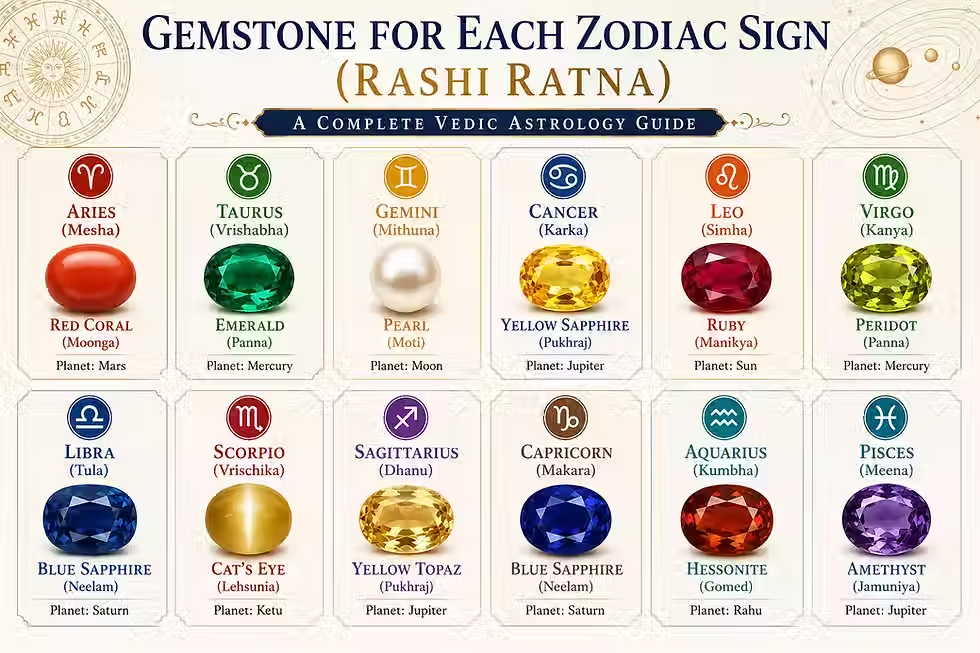
Rashi (Sign) | Should Wear? | Notes |
Dhanu (Sagittarius) | ✅ Highly Recommended | Jupiter rules this sign — most beneficial |
Meen (Pisces) | ✅ Highly Recommended | Jupiter rules this sign — very auspicious |
Mesh (Aries) | ✅ Recommended | Jupiter is 9th lord — favourable |
Karka (Cancer) | ✅ Recommended | Jupiter is 9th lord — very beneficial |
Simha (Leo) | ✅ Recommended | Jupiter is 5th lord — supports career |
Vrischik (Scorpio) | ✅ Often Recommended | Jupiter is 2nd & 5th lord |
Mithun (Gemini) | ⚠️ Consult Astrologer | Jupiter is 7th + 10th lord — mixed results |
Kanya (Virgo) | ❌ Generally Avoid | Jupiter rules 4th + 7th — may cause issues |
Makar (Capricorn) | ❌ Generally Avoid | Jupiter is debilitated — effects diminished |
Vrishabh (Taurus) | ⚠️ Consult Astrologer | Case-specific — full chart analysis required |
Tula (Libra) | ⚠️ Consult Astrologer | Jupiter is 3rd + 6th lord — generally unfavourable |
Kumbh (Aquarius) | ❌ Generally Avoid | Jupiter as 2nd + 11th — consult first |
Always present your complete Kundli — with exact date, time, and place of birth — to a qualified Jyotish before purchasing. Yellow sapphire rashi compatibility is the starting point, not the final answer.
Jupiter's house placement, aspects received, and conjunctions in your specific chart are the decisive factors — not Rashi alone. Pukhraj stone for Dhanu rashi and pukhraj stone for Meen rashi wearers are almost always beneficial, but even here, the full chart must be examined.
On the question of who should wear pukhraj stone among women: the tradition is particularly emphatic. Jupiter is the significator of the husband in a woman's chart. Pukhraj stone benefits for females facing vivah badha — repeated marriage delays, broken engagements, early marital friction — are among the best-documented in Jyotish practice. Fertility support and household prosperity benefits are also widely recognised.
Other Important Cautions
Do not wear Pukhraj with Blue Sapphire (Neelam). Jupiter and Saturn are natural enemies in Vedic astrology. Combining them creates internal conflict.
Do not wear with Diamond (Heera) or Zircon. Venus and Jupiter, while not enemies, represent different energies that can neutralise each other.
Avoid if Pukhraj is combined with Hessonite (Gomed) or Cat's Eye (Lahsuniya). These are gemstones of Rahu and Ketu — shadow planets that conflict with Jupiter's energy.
Do not wear a cracked, scratched, or milky (opaque) yellow sapphire. Flawed stones are believed to transmit negative energy rather than positive Jupiter vibrations.
How to Wear Pukhraj Stone - Complete Vedic Ritual Guide
Step 4 - Purification Ritual (Pran Pratishtha)
The night before wearing, place the ring in a clean copper or silver bowl containing: raw milk (kaccha doodh), Gangajal or clean river water, honey (shahad), and 5–7 fresh Tulsi leaves. Leave overnight. Next morning, remove, rinse with clean water, and wipe gently with a yellow silk cloth.
How to Wear Pukhraj Stone - Vedic Ritual Step-by-Step Guide
1. The Right Metal
Gold is Jupiter's metal. The pukhraj ring should always be set in 22-karat or 24-karat yellow gold. On the pukhraj stone in gold or silver question, the answer is unambiguous: silver is a Moon metal and actively diminishes Jupiter's energy. If gold is out of budget, Panchdhaatu (the five-metal alloy) is the acceptable alternative on your astrologer's guidance.
2. The Right Finger
The pukhraj stone which finger guidance is clear: the index finger (Tarjani) of the right (working) hand, ruled by Jupiter. An open-back setting that ensures direct skin contact with the stone is essential for full astrological transmission.
3. The Right Day and Time
The stone should be worn on a Thursday (Guruvar) — Jupiter's day. For best results, wear it during the Shukla Paksha (waxing moon phase) of the lunar month.
The ideal time to wear is during Jupiter's hora — the auspicious hour ruled by Jupiter on Thursday. For a good approximation, the early morning window between sunrise and 11 AM on Thursday is most favourable.
4. The Right Mantra
Face east. Before wearing, chant the Brihaspati (Jupiter) mantra 108 times before placing the ring:
ॐ ग्रां ग्रीं ग्रौं सः गुरुवे नमः(Om Graam Greem Graum Sah Gurave Namaha)
With full devotion, slide the pukhraj ring onto the index finger. The how to activate pukhraj stone process is complete.
5. Purification and Energisation
The night before wearing, place the ring in a clean copper or silver bowl:
Soak the ring in raw milk, honey, 5–7 fresh Tulsi leaves and Gangajal (holy water). Leave overnight.
Next morning, remove, rinse with clean water, and wipe gently with a yellow silk cloth.
Place the ring on a yellow cloth or banana leaf.
Offer yellow flowers (marigold or champa), light a ghee diya, and chant the mantra 108 times.
Wear immediately after the ritual.
JupiterKart Advantage: All certified Pukhraj gemstones from JupiterKart are energised by experienced Vedic pandits before dispatch — so your stone arrives ready to wear with full ritual activation.
6. Minimum Weight (Ratti)
Yellow Sapphire should be a minimum of 2 Ratti (approximately 1.8 carats) to be astrologically effective. Most astrologers recommend 3–5 Ratti for adults. Heavier stones (6–7 Ratti) are sometimes prescribed for serious planetary afflictions, but always go by your astrologer's recommendation.
7. Quality of the Stone
The quality of Pukhraj directly affects its astrological potency. Look for:
Colour: Bright canary yellow or golden yellow. Lemon yellow is also accepted. Avoid pale or muddy stones.
Clarity: Eye-clean (no visible inclusions). Inclusions reduce the stone's energy transmission.
Origin: Ceylon (Sri Lanka) Pukhraj is the most prized for astrological use. Bangkok and African yellow sapphires are also used but are considered less potent.
Certification: Always buy a stone certified by a recognised gemological lab (GIA, IGI, GemTesting Lab).
Step 8 — Reactivation
Re-energise every 6 months using the same purification method, ideally on a Guru Pushya Nakshatra day. The pukhraj stone mantra should be recited every Thursday morning as an ongoing practice.
How Long Does Pukhraj Take to Show Results?
Yellow Sapphire is known as a relatively fast-acting stone. Most wearers report:
Initial effects: Within 3–7 days (improved mood, clarity, optimism)
Significant results: Within 40–90 days
Full effect: 1–3 years of consistent wear
Results vary based on chart strength, stone quality, and adherence to wearing rules. If you experience unusual discomfort, irritability, or unexplained unease within the first week, remove the stone and consult your astrologer — it may not be the right stone for your chart at this time.
How to Take Care of Your Yellow Sapphire
Clean with a soft toothbrush, mild soap, and lukewarm water every 2–3 weeks.
Avoid exposing to harsh chemicals, bleach, or ultrasonic cleaners.
Remove before swimming, heavy exercise, or sleeping.
Store in a soft pouch away from other gemstones to prevent scratching.
Re-energise the stone every 6 months with the purification ritual described above.
Yellow Sapphire vs Yellow Topaz: Know the Difference
Many sellers substitute Yellow Topaz or Citrine for Yellow Sapphire due to the lower price point. This is one of the most common gemstone frauds in India.
Property | Yellow Sapphire (Pukhraj) | Yellow Topaz | Citrine |
Hardness | 9 Mohs | 8 Mohs | 7 Mohs |
Astrological value | Very high | None (substitute only) | None |
Price (per carat) | ₹3,000–₹1,00,000+ | ₹200–₹1,000 | ₹100–₹500 |
Lab certification | GIA / IGI certified | Easily faked | Easily faked |
Appearance | Deep yellow, vitreous lustre | Pale yellow, warm tones | Pale to deep yellow, glassy |
Always demand a lab certificate when buying Pukhraj. JupiterKart provides certified, original Yellow Sapphire gemstones with full gemological documentation — so you never have to wonder if you're wearing the real thing.
How to Identify Original Pukhraj — Real vs Fake Guide
Here is the truth most sellers will not tell you: citrine — a common quartz — is sold to thousands of Indian buyers every year as Pukhraj. A certified natural Yellow Sapphire and a citrine are as different as a gold sovereign and a painted stone. The original pukhraj vs fake question is the most important one to resolve before spending a single rupee.
Test Method | Original Pukhraj | Fake / Glass / Substitute |
Colour | Natural lemon to vivid golden yellow | Overly vivid orange-yellow suggests heating |
Inclusions | Tiny natural inclusions under magnification | Perfectly flawless = likely glass or lab stone |
Temperature | Stays cool to touch longer | Glass warms quickly in hand |
Scratch Test | Mohs 9 — highly scratch-resistant | Glass or citrine scratches more easily |
UV Light | May show mild fluorescence | Glass typically shows none |
Certification | GIA, GRS, IGI, or SSEF certified | No cert or unknown lab = do not buy |
Common substitutes mis-sold as Pukhraj — avoid without exception:
Yellow Topaz — softer, cheaper, zero Jupiter connection in Vedic gemology
Citrine — quartz; the yellow sapphire vs citrine difference is fundamental; citrine has no established Jupiter rulership in Jyotish
Glass-filled yellow sapphire — heated and fracture-filled; looks beautiful, delivers no astrological effect
Lab-created sapphire — chemically identical, energetically inert per Vedic practitioners
Always purchase a certified pukhraj stone backed by a natural yellow sapphire report from a recognised international laboratory. No certificate — no purchase.
Pukhraj Stone Side Effects — When and Why to Be Careful
Pukhraj is among the safest Navratna gems — but no gemstone is universally beneficial. Pukhraj stone side effects occur when Jupiter is a functional malefic in your chart, ruling inauspicious houses. In such cases, wearing Pukhraj can amplify negative Jupiterian traits: overconfidence, financial overextension, liver and digestive problems, or unexplained weight gain.
Incompatible Rashi or ascendant wearers — particularly Kanya, Makar, and Kumbh — may experience restlessness, bloating, or disrupted sleep within days of wearing. Excessively large carat weight worn without astrological consultation can be overpowering for sensitive constitutions.
Practical rule: If any adverse effects appear within 72 hours of first wearing, remove the ring immediately and consult a qualified Jyotish before resuming wear.
Who should wear pukhraj stone is a question only your birth chart can answer authoritatively. Gemstones complement karmic patterns — they do not replace medical treatment, financial planning, or professional advice.
Conclusion — Is Pukhraj the Right Ratna for You?
Three truths about Pukhraj Ratna stand above all others.
First: it is Jupiter's own gemstone — the Guru Ratna — and nothing else replicates its direct planetary connection in Vedic astrology. Citrine is not Pukhraj. Yellow Topaz is not Pukhraj. There is no shortcut to Jupiter's blessings.
Second: when worn correctly after proper Kundli consultation, Pukhraj is considered one of the safest, most broadly beneficial, and most life-affirming of all the Navratna gems. Its record across thousands of years of Vedic tradition is not coincidence.
Third: certification and origin are everything. Invest in a real, untreated, lab-certified Ceylon Pukhraj — or do not invest at all.
Remember Priya from Pune — who wore her Pukhraj not as superstition, but as an act of faith in a tradition older than recorded history. Jupiter blesses those who seek wisdom before they seek wealth. Consult first. Then wear. Then prosper.
Jupiter's Most Powerful Gem — Now Certified & Delivered to Your Door
Natural, certified, astrologically-active Pukhraj Ratna in Ceylon and Burma origin — every stone at JupiterKart comes with international lab certification, a complete Vedic wearing ritual guide, and a free astrologer consultation on purchase. Premium unheated Ceylon Pukhraj is rare and in limited availability.
✅ 100% Natural & Untreated | GIA / IGI Certified✅ Free Wearing Ritual Guide | Free Astro Consultation on Purchase✅ Pan-India & International Delivery.
Frequently Asked Questions — Pukhraj Stone
Q1: What are the main benefits of wearing Pukhraj stone?
Pukhraj ratna strengthens Jupiter in the birth chart, delivering yellow sapphire benefits across wealth, marriage, education, health, and spiritual growth. Key outcomes include removal of vivah badha (marriage obstacles), improved financial fortune, sharper intellect for competitive examinations, and general auspiciousness in life. Pukhraj is most powerful when worn after a qualified Jyotish confirms a weak or benefic Jupiter in your specific Kundli.
Q2: What are the main astrological benefits of Pukhraj for women?
Wearing a natural Pukhraj (Yellow Sapphire) is traditionally believed to help resolve marriage delays, enhance marital harmony, and bring emotional stability. In Vedic astrology, it is also highly regarded for supporting fertility, career growth, and overall family expansion.'
Q3: Why is Yellow Sapphire recommended for female marriage delays?
In Vedic astrology, Jupiter (Brihaspati) represents the husband in a woman's birth chart. If Jupiter is weak or afflicted, it can cause vivah badha (obstacles or delays in marriage). Wearing a certified Yellow Sapphire helps strengthen the seventh house, removing these blockages and attracting a compatible life partner.
Q4: Can wearing a Pukhraj stone improve relationship harmony?
Yes. If you are experiencing early marital friction, Jupiter's gemstone is often recommended to foster patience, wisdom, and peaceful communication. It brings a grounding energy that helps stabilize household dynamics and strengthen relationship bonds.
Q5: Does the Yellow Sapphire help with fertility and family planning?
Jupiter is known as the Putra Karaka (significator of children). For women planning to expand their family, astrologers frequently recommend Yellow Sapphire to strengthen the fifth house, inviting blessings for a healthy and prosperous lineage. (Disclaimer: Gemstone therapy is a complementary astrological practice and should never replace professional medical advice or fertility treatments).
Q5: Who should wear yellow sapphire as per Vedic astrology?
Dhanu (Sagittarius) and Meen (Pisces) Rashi individuals benefit most, as Jupiter rules both signs directly. Mesh, Karka, Simha, and Vrischik ascendants are also generally favourable. However, who should wear pukhraj stone is ultimately determined by Jupiter's house position, lordship, and aspects in the individual birth chart — not Rashi alone. Always consult a qualified Jyotish with your full Kundli before purchasing.
Q6: On which finger should Pukhraj ring be worn?
The pukhraj ring is worn on the index finger (Tarjani) of the right working hand. This finger is governed by Jupiter in both palmistry and Vedic tradition. Direct skin contact between stone and finger is essential for astrological effectiveness — an open-back gold setting is strongly preferred over a closed-base setting that blocks contact.
Q7: What is the price of original Pukhraj stone in India?
Pukhraj stone price in India varies widely by origin. Ceylon (Sri Lanka) stones range from ₹5,000 to ₹80,000+ per carat based on colour, clarity, and treatment status. Thailand-origin stones cost ₹1,500–₹6,000/carat but are typically heat-treated. Lab-created sapphires cost ₹500–₹3,000/carat but are not recommended for Vedic use. Always calculate total carat cost using the 1/12th body-weight formula.
Q8: Which is better — Ceylon Pukhraj or Bangkok yellow sapphire?
Ceylon Pukhraj is significantly superior for astrological purposes. Ceylon yellow sapphire India buyers trust for its natural colour saturation, superior clarity, and untreated status. Bangkok (Thai) sapphires are almost always heat-treated to artificially enhance their colour — a process most Vedic practitioners consider astrologically diminishing. For serious gemstone use, always choose untreated Ceylon and verify with certification.
Q9: Can Pukhraj stone be worn in silver?
No. Silver is the metal of the Moon (Chandra), not Jupiter. Pukhraj stone in gold — specifically 22-karat or 24-karat yellow gold — is the correct and traditional setting. Silver actively diminishes the stone's Jupiterian potency. When gold is cost-prohibitive, Panchdhaatu (the traditional five-metal alloy) is the accepted Vedic alternative, as recommended by your astrologer.
Q10: What is the difference between Pukhraj and Citrine?
The yellow sapphire vs citrine difference is fundamental and cannot be overstated. Pukhraj is a corundum gemstone (Mohs 9) directly associated with Jupiter in Vedic gemology. Citrine is a quartz variety (Mohs 7) with no established Jupiter connection in Jyotish. Despite the visual colour similarity, citrine has zero astrological equivalence to Pukhraj — yet it is routinely mislabelled and mis-sold across India. Always insist on a GIA, IGI, or GRS laboratory certificate before purchasing.
Q11: What happens if the wrong person wears Pukhraj stone?
Pukhraj stone side effects for incompatible wearers include restlessness, digestive issues, unexplained weight gain, overconfidence leading to poor financial decisions, and possible liver-related discomfort. When Jupiter rules inauspicious houses in the chart — as it can for Kanya, Makar, or Kumbh ascendants — Pukhraj can amplify negative Jupiterian effects. If adverse reactions appear within 72 hours of wearing, remove the ring immediately and consult a qualified Jyotish
About Author
The author of this post is the expert team at Jupiter Kart, comprising certified gemologists and Vedic astrology practitioners. With over fifteen years of combined expertise in crystal healing and gemstone authentication, they are trusted authorities. Rather than a single writer, the team collaboratively authors content to provide accurate, expert-backed information. Their primary mission is to ethically source quality gemstones and rigorously verify each product before making recommendations. Every featured gemstone is lab-tested, certified for authenticity, and backed by a satisfaction guarantee. They personally test every stone and update their comprehensive crystal guides on a quarterly basis to ensure accuracy.
Disclaimer: The information in this article is based on traditional Vedic astrology and is intended for educational purposes only. Yellow Sapphire (Pukhraj) is one of the most powerful gemstones in Vedic astrology and should never be worn without consulting a qualified Vedic astrologer and completing a suitability trial. Individual results vary and depend entirely on the wearer's birth chart.


good